Espresso Cleaner vs Descaler: The Difference
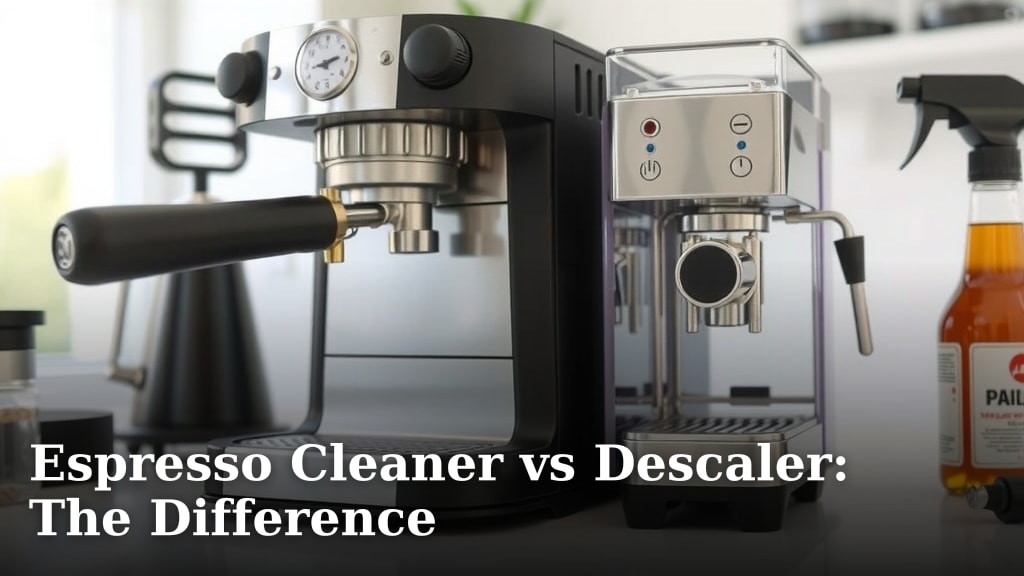
Espresso cleaner and descaler serve different purposes for your machine. Espresso cleaner is designed to remove oily coffee residue. Descaler, on the other hand, tackles mineral buildup. Using the wrong one can leave your machine dirty or damaged.
Understanding this difference is key to keeping your espresso maker in top shape. While both help with maintenance, they address distinct issues. This ensures your espresso tastes its best and your machine lasts longer. Think of it like washing your car versus changing its oil – both are vital, but for different reasons.
- Espresso cleaner removes oily coffee grounds.
- Descaler removes hard water mineral buildup.
- Using them interchangeably can harm your machine.
- Both are important for great-tasting espresso.
- Regular cleaning and descaling prevent costly repairs.
Let’s break down exactly what each one does and when you should use it.
Understanding Your Espresso Machine’s Needs: Cleaner vs. Descaler
Your espresso machine is a sophisticated piece of equipment. It needs different kinds of care. Many people wonder if espresso cleaner and descaler are the same. We found that they are quite different. They tackle separate issues in your machine. Using the right one at the right time is important. Let’s look at what each does.
What is Espresso Machine Cleaner For?
Espresso machine cleaner is your go-to for tackling oily buildup. Think about the coffee oils that are left behind after every brew. These oils can build up over time. They can affect the taste of your espresso. They can also clog parts of your machine. This cleaner is designed to break down and rinse away these residues. It’s like giving your machine a good wash. This helps ensure a pure, fresh coffee flavor in every cup.
The Role of Coffee Oils
Coffee beans contain natural oils. These oils are released when the beans are ground and brewed. They contribute to the crema and body of your espresso. However, they also stick to the inside of your machine. This includes the brew group, shower screen, and portafilter. Over time, these oils can become rancid. This leads to bitter or stale-tasting coffee. Cleaning them out regularly is key.
When to Use Espresso Cleaner
You should use espresso cleaner on a regular schedule. Many manufacturers suggest a cleaning cycle about every 200 shots. Or, you might clean it once a month, whichever comes first. If you notice your espresso tasting a bit off, it’s a good sign to clean. You’ll typically use a cleaning tablet or powder. You dissolve it in water and run it through the brew cycle. Then, you rinse thoroughly to remove all cleaning solution.
What Does a Descaler Do?
A descaler is specifically formulated to combat mineral deposits. These minerals come from the water you use. If you have hard water, you have more dissolved minerals like calcium and magnesium. These minerals can build up inside your machine’s heating element and pipes. This buildup is called scale. Scale can make your machine work harder. It can also reduce its lifespan. Descaler works to dissolve this hard mineral crust.
The Problem with Mineral Buildup
Mineral deposits are a common issue for any appliance that heats water. In your espresso machine, scale can insulate the heating element. This means your machine has to work harder and use more energy to heat the water. It can also lead to inconsistent brewing temperatures. This affects your espresso’s taste. In severe cases, blockages can occur. This can cause damage to your machine. Many plumbing and appliance guidelines mention water hardness as a factor (CDC). Using filtered or distilled water can help reduce this. But even then, some buildup can occur.
When to Use a Descaler
You should descale your espresso machine less often than you clean it. The frequency depends on your water hardness. For very hard water, you might descale every 2-3 months. For softer water, you might only need to do it every 6 months or even yearly. Signs your machine needs descaling include: longer heat-up times, weaker espresso flow, or unusual noises. You typically use a liquid descaling solution. You run it through the water tank and brew system, then rinse thoroughly. Always follow your machine’s manual for specific descaling instructions.
Key Differences and When to Use Each
The main difference lies in what they target. Cleaner deals with organic matter (oils). Descaler targets inorganic matter (minerals). Using them incorrectly can cause problems. For instance, using a descaler when you only need to clean oils won’t get rid of the coffee residue. It might even introduce new flavors. Conversely, using cleaner when you have scale buildup won’t do much for the minerals. In fact, some cleaning agents can react with scale, potentially creating issues.
Direct Comparison: Cleaner vs. Descaler
Let’s lay it out clearly. Here’s a quick comparison:
| Feature | Espresso Cleaner | Descaler |
|---|---|---|
| Purpose | Removes oily coffee residue and grounds. | Removes mineral buildup (scale) from water. |
| Target Area | Brew group, portafilter, shower screen. | Heating element, water lines, valves. |
| Frequency | More frequent (e.g., monthly or every 200 shots). | Less frequent (e.g., every 2-6 months, depending on water). |
| Signs of Need | Tastes bitter, stale, or off. | Longer heating times, weak flow, machine noises. |
| Ingredients | Often contain alkaline compounds or detergents. | Typically contain acids (e.g., citric, lactic, or sulfamic acid). |
Why Using the Wrong One is a Problem
Imagine you use descaler when you only have coffee oils. You might just be adding acid to your machine unnecessarily. This could potentially affect certain seals or internal components over time. Many experts caution against using harsh chemicals. On the other hand, if you have significant scale buildup and only use cleaner, you won’t solve the mineral problem. This can lead to performance issues and eventual damage.
Your Maintenance Checklist
Keeping your espresso machine happy doesn’t have to be complicated. Just remember these simple steps:
- Regular Cleaning: Use espresso cleaner as recommended by your machine’s manual.
- Periodic Descaling: Address mineral buildup when necessary.
- Water Quality: Consider using filtered water to reduce mineral content.
- Read Your Manual: Always follow your manufacturer’s specific cleaning and descaling instructions.
- Visual Inspection: Look for any signs of unusual buildup or performance issues.
- Rinse Thoroughly: After any cleaning or descaling cycle, ensure you rinse the machine well.
Conclusion
You’ve learned that espresso cleaner and descaler are not interchangeable. Cleaner tackles those pesky coffee oils, keeping your brew fresh. Descaler fights the hard water minerals that can clog your machine. Using the right product at the right time protects your investment. It ensures consistently delicious espresso. Don’t neglect your machine’s unique needs. Make a habit of regular cleaning and periodic descaling. Check your machine’s manual for specific schedules. This simple maintenance routine will keep your espresso maker running smoothly for years to come.
Frequently Asked Questions
Can I use household vinegar to descale my espresso machine?
While vinegar is a common household cleaner, it’s generally not recommended for descaling espresso machines. Vinegar’s acidity can be too harsh for internal components and seals. It may also leave a residual taste that affects your coffee. Always use a descaler specifically formulated for espresso machines to avoid potential damage.
How often should I backflush my espresso machine?
Backflushing with espresso cleaner is typically recommended about once a month, or after every 200 shots of espresso. This process helps remove coffee oils from the brew group. Refer to your espresso machine’s manual for the manufacturer’s specific guidelines on backflushing frequency.
What happens if I don’t descale my machine?
Not descaling your machine can lead to mineral buildup, known as scale. This scale can insulate the heating element, making your machine less efficient and potentially causing it to overheat. It can also restrict water flow, leading to weaker espresso and eventual damage to critical parts if left unaddressed.
Is filtered water enough to prevent scale buildup?
Using filtered water can significantly reduce the amount of minerals in your water, which in turn slows down scale buildup. However, even filtered water can contain some dissolved minerals. Therefore, periodic descaling is still necessary, though perhaps less frequently, depending on the quality of your filtration system.