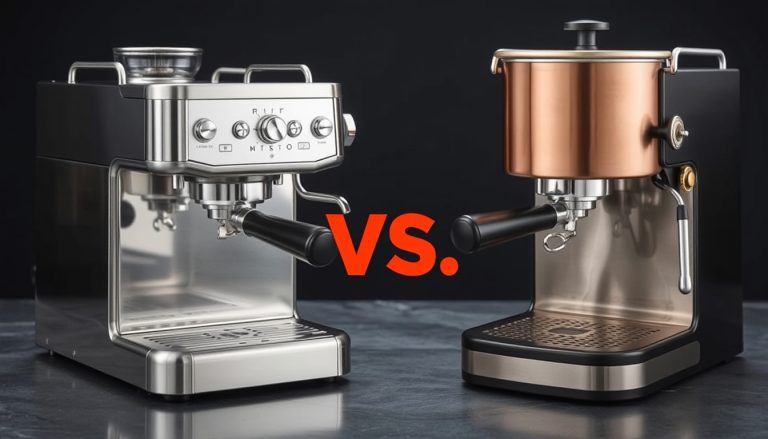

Espresso Machine vs Coffee Machine: Compared
When deciding between an espresso machine and a coffee machine, the key difference is how they brew. Espresso machines force hot water under high pressure through finely ground coffee, creating a concentrated shot. Regular coffee machines use gravity to drip hot water through coarser grounds, producing a larger, less intense cup. Your preference for strength and preparation style really matters here.
Choosing the right machine depends on your daily routine and taste. Do you crave a strong, quick espresso for a morning boost, or do you prefer a larger, milder cup to sip on? We found that understanding the basic brewing process helps immensely. Think about the type of coffee you enjoy most.
- Espresso machines make concentrated coffee using pressure.
- Standard coffee machines drip brew for larger, milder cups.
- Your taste and how you like your coffee are deciding factors.
- Consider your morning routine and desired strength.
Let’s break down the differences to help you make the best choice for your kitchen.
Espresso Maker vs. Coffee Brewer: What’s the Real Difference?
When you’re standing in the aisle, staring at rows of shiny machines, it’s easy to feel a little lost. You might be wondering, “What really separates an espresso machine from a regular coffee maker?” We’ve looked into it, and the main distinction boils down to how they extract flavor. It’s all about pressure and grind size.
Think of it this way: an espresso machine is like a high-performance sports car. It uses a lot of power (pressure) to get the most intense flavor out of the coffee beans, fast. A standard coffee maker is more like a reliable sedan; it gets the job done smoothly and consistently, but without that intense burst. Your morning coffee ritual might lean more towards one than the other.
How Espresso Machines Work Their Magic
Espresso machines are built for one thing: creating that rich, concentrated shot of espresso. They use a pump to force hot water through very finely ground coffee beans under high pressure. This process typically takes around 20-30 seconds.
The Science Behind the Shot
This high pressure is key. It allows the water to extract more oils and solids from the coffee grounds. This results in a thicker, more viscous liquid with a layer of reddish-brown foam on top, called crema. Many coffee lovers say the crema is a sign of a well-pulled espresso shot.
What Kind of Coffee Does It Make?
Espresso itself is a small, potent drink. You can drink it straight, or use it as the base for other popular coffee drinks like lattes, cappuccinos, and macchiatos. If you enjoy those creamy, frothy beverages, an espresso machine is likely your ticket.
Grind Size Matters (A Lot!)
For espresso, you’ll need a very fine coffee grind. This is much finer than what you’d use for a drip coffee maker. If your grind is too coarse, the water will flow through too quickly, and you won’t get that concentrated flavor. Too fine, and it might clog the machine.
Understanding Standard Coffee Machines
Regular coffee machines, often called drip coffee makers, have been a kitchen staple for decades. They are designed for convenience and brewing larger quantities of coffee at once.
The Drip Method Explained
These machines work by heating water and then letting gravity do the work. The hot water drips through coffee grounds held in a filter basket. It then flows into a carafe below. The process is slower than espresso making and uses much lower pressure.
Flavor Profile and Strength
The coffee produced by a drip machine is typically less intense and has a lighter body than espresso. It’s a more mellow cup, perfect for sipping throughout the morning. We found that this brewing method is generally more forgiving with grind size.
Brewing Volume
One of the biggest advantages of a standard coffee maker is its ability to brew multiple cups at once. This is ideal for households with several coffee drinkers or for when you just want a big mug to yourself.
Key Differences at a Glance
To help you visualize the distinctions, let’s lay out the main differences side-by-side. This comparison can help you decide which machine best fits your lifestyle.
| Feature | Espresso Machine | Standard Coffee Machine |
|---|---|---|
| Brewing Method | High-pressure hot water forced through fine grounds | Gravity-fed hot water dripping through coarser grounds |
| Pressure Used | High (9 bars or more) | Low (gravity) |
| Grind Size | Very Fine | Medium to Coarse |
| Brew Time | Short (20-30 seconds per shot) | Longer (minutes per pot) |
| Coffee Output | Small, concentrated shots | Larger, milder cups |
| Common Use | Espresso shots, lattes, cappuccinos | Everyday coffee, large batches |

Which Machine is Right for You?
The choice really comes down to your personal coffee preferences and daily habits. Do you love the bold, intense flavors of espresso and espresso-based drinks? Or do you prefer a larger, smoother cup to slowly savor?
Consider Your Morning Routine
If you’re always on the go, an espresso machine can deliver a quick, powerful caffeine boost. Many home espresso machines can brew a shot in under a minute. A drip coffee maker, on the other hand, might be better if you have a more leisurely morning or need to make coffee for multiple people.
Think About Your Favorite Drinks
Are you a fan of milk-based coffee drinks like lattes and cappuccinos? Then an espresso machine is almost a must. While some drip machines can brew strong coffee, they can’t replicate the rich crema and concentrated base needed for true espresso drinks. Many espresso machines also come with steam wands to froth milk.
Budget and Counter Space
Espresso machines can range widely in price, and many can take up a good amount of counter space. Standard coffee makers are generally more affordable and come in compact designs. We found that budget can be a significant factor for many first-time buyers.
Making Your Final Decision: A Quick Checklist
To help you narrow it down, ask yourself these questions:
- Do you prefer strong, concentrated coffee or milder, larger cups?
- Are you interested in making lattes or cappuccinos?
- How much time do you typically have for making coffee in the morning?
- How many people usually drink coffee in your household?
- What is your approximate budget for a coffee machine?
- How much counter space are you willing to dedicate to your coffee setup?
Conclusion
So, you’ve seen how espresso machines and standard coffee makers brew differently. It all comes down to pressure and grind size. Espresso machines deliver bold, concentrated shots using high pressure for drinks like lattes. Standard coffee makers use gravity for larger, milder cups perfect for sipping. Consider your favorite coffee drinks and your morning routine. Your ideal machine is out there, waiting to brew your perfect cup. Take a moment to think about what matters most to you and make your choice!
Frequently Asked Questions
Can a regular coffee machine make espresso?
No, a standard coffee machine cannot make true espresso. Espresso requires high pressure to extract flavor, which drip coffee makers don’t provide. You’ll get a different style of coffee, but not espresso.
Are espresso machines difficult to use?
Some espresso machines can have a learning curve, especially semi-automatic and manual models. However, many super-automatic machines are very user-friendly and brew espresso with the press of a button.
What’s the difference in cost between the two machines?
Generally, standard coffee makers are less expensive than espresso machines. Espresso machines can range from budget-friendly options to very high-end professional units, impacting the overall cost significantly.
Which machine is better for making coffee for a crowd?
For making coffee for multiple people at once, a standard coffee machine is usually the better choice. You can brew a large pot in one go, whereas an espresso machine typically brews one or two shots at a time.