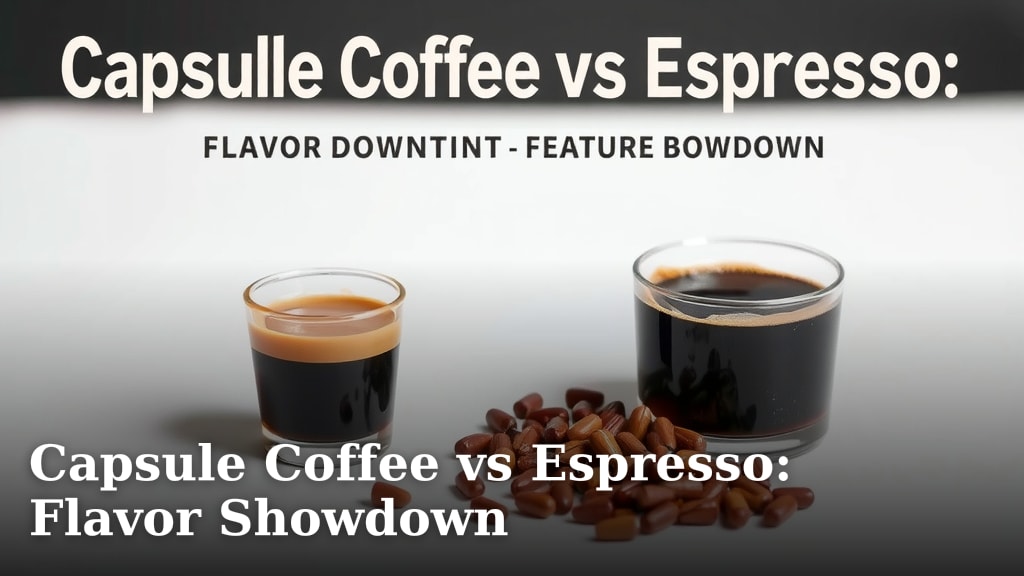
Capsule Coffee vs Espresso: Flavor Showdown
When comparing capsule coffee and espresso, the key difference lies in their preparation method and the resulting flavor profile. Espresso is a concentrated coffee brewed by forcing hot water under pressure through finely-ground coffee beans, resulting in a bold, intense shot. Capsule coffee, on the other hand, uses pre-portioned capsules and a machine to brew coffee, often offering a more convenient, though sometimes less robust, experience.
Many home brewers love capsule systems for their speed and simplicity. Yet, traditional espresso aficionados often prefer the ability to control grind size and tamping for a truly customized brew. Both methods aim to deliver a satisfying coffee experience, but they achieve it through distinct processes that impact taste and aroma.
- Capsule coffee offers convenience.
- Espresso delivers intense, bold flavor.
- Espresso allows for more brewing control.
- Capsule machines are quick and easy.
Let’s break down the flavors and brewing styles of capsule coffee versus true espresso, so you can decide which best fits your morning routine.
So, you’re curious about the coffee in your cup. Is it the quick convenience of a capsule, or the bold punch of espresso? Both can start your day right, but they bring very different flavors to the table. Let’s look at what makes them tick.
The Great Coffee Debate: Capsules vs. Espresso Flavor
What’s the real taste difference between coffee from a pod and a traditional espresso shot? It boils down to pressure, grind, and freshness.
Understanding Espresso’s Flavor Profile
Espresso is a true coffee concentrate. It’s made by forcing hot water through finely ground coffee beans. This process extracts oils and solids. The result is a thick, syrupy shot. It has a strong, **bold flavor**. You’ll often taste a pleasant bitterness. There are also subtle sweet and acidic notes.
The Role of Crema
A key part of espresso is its crema. This is the reddish-brown foam on top. It forms from oils and carbon dioxide. Research shows crema adds to the aroma and mouthfeel. It’s a sign of a well-pulled espresso shot. A good crema indicates freshness. It also suggests the right grind and pressure were used. The taste of crema is slightly bitter. It also has a nutty or caramel-like quality.
What About Capsule Coffee Flavor?
Capsule coffee machines are super popular. They offer a lot of convenience. You pop in a pod, press a button, and coffee is ready. But how does this affect taste? The coffee inside the capsule is pre-ground. It’s sealed to keep it fresh. When the machine brews, it injects hot water. It then pierces the capsule.
Flavor Consistency and Variety
Many people find capsule coffee to be **highly consistent**. Every cup tastes pretty much the same. This is great if you like predictability. However, some coffee lovers feel it can lack the depth of fresh espresso. The pre-ground nature means it’s not as fresh as beans ground right before brewing. The flavor can range widely based on the brand and blend. Some capsules aim for espresso-like intensity. Others are designed for lighter coffee drinks.
The Impact of Machine Brewing
Capsule machines use less pressure than espresso machines. This means they extract fewer oils and solids. This can lead to a lighter body and a less intense flavor. It’s often closer to a strong drip coffee. Some machines offer different brew sizes. This allows for some control. But you can’t change the grind size or tamp pressure. These are big factors in traditional espresso.
Comparing Brewing Methods and Their Taste Impact
The way coffee is made directly influences its taste. Let’s break down the key differences.
Espresso: The Art of Precision
Making good espresso is often called an art. It requires practice. You need to choose the right coffee beans. Then, you grind them to a very fine consistency. Tamping the grounds evenly is also important. The water temperature and pressure must be just right. We found that even small changes can greatly affect the final flavor. It’s a hands-on process. Many baristas say it’s a labor of love.
Capsule Coffee: The Science of Simplicity
Capsule systems simplify this complex process. The manufacturers do the grinding and tamping for you. They put it inside a sealed capsule. This is convenient, no doubt. However, you lose the ability to fine-tune. You can’t adjust the grind. You can’t change how hard you tamp the coffee. This means you’re generally stuck with the flavor profile the company designed. It’s set in stone, so to speak.
Key Differences in Flavor Notes
When you taste them side-by-side, you’ll notice distinct differences.
Intensity and Body
Espresso is known for its **intense flavor**. It has a full, rich body. This is due to the high pressure extraction. Capsule coffee can be intense, but it’s often less so. The body is usually lighter. Some capsule coffees can taste watery. Others are surprisingly robust. It really depends on the specific capsule. We found that replicating espresso’s thick mouthfeel is hard with capsules.
Aroma and Nuance
The aroma of fresh espresso is often more complex. It can have floral or fruity notes. There might be hints of chocolate or nuts. Espresso’s aroma is released when the crema hits the air. Capsule coffee aromas can be good. But they might be less vibrant. The sealing of the capsule can preserve some scent. However, the brewing process might not release it as effectively. Experts say the nuances can get lost.
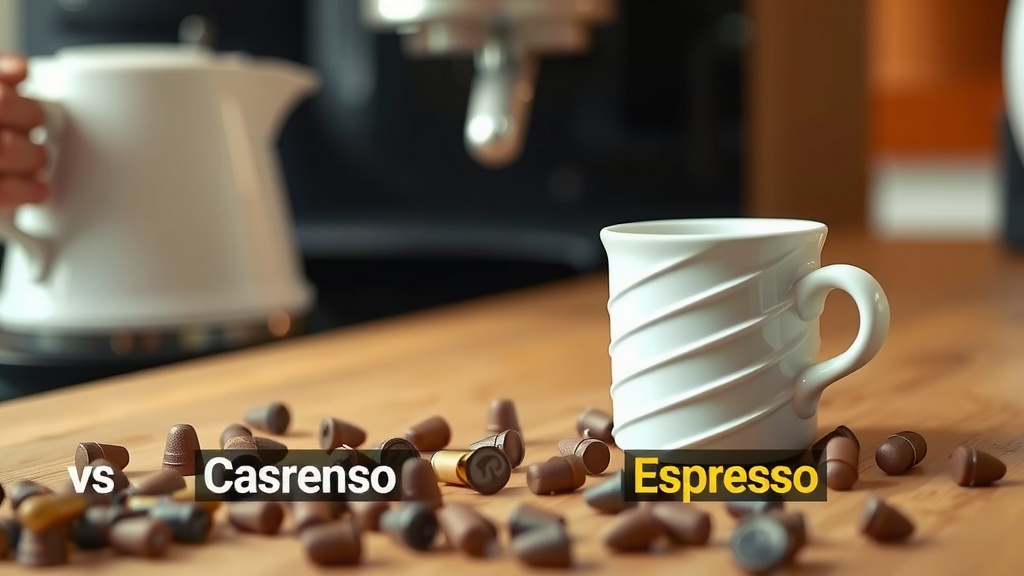
Your Perfect Cup: What Matters Most to You?
Deciding between capsule coffee and espresso comes down to your priorities. What do you value most in your morning brew?
Quick Checklist: Which Coffee Method is For You?
- Do you need coffee in seconds?
- Do you love experimenting with flavors?
- Is a rich, thick mouthfeel important?
- Do you prefer consistent, predictable taste?
- Are you willing to learn some brewing techniques?
- Is minimizing cleanup a top priority?
If you chose mostly the first, third, and sixth, a capsule machine might be your best friend. If you leaned towards the second and fourth, and are open to the fifth, then traditional espresso could be calling your name. It’s all about what brings you the most joy in your daily coffee ritual.
Conclusion
Ultimately, your perfect cup of coffee comes down to your personal preferences. Espresso offers that deeply rich, intense flavor and satisfying crema that coffee purists adore. It’s a hands-on experience for those who enjoy the craft. Capsule coffee, on the other hand, provides unparalleled speed and consistency for your busy mornings. It makes enjoying a decent cup effortless. Consider what you prioritize – a precisely crafted shot or a quick, reliable brew – and you’ll find your ideal match. Go ahead and try both to truly discover which one makes your day better!
Frequently Asked Questions
Can capsule coffee taste as strong as espresso?
Some capsule coffees are designed to mimic espresso’s intensity. They use darker roasts and finer grinds. However, they typically use less pressure during brewing. This means they usually can’t achieve the same depth or body as true espresso. You might get a strong flavor, but the mouthfeel will likely differ.
Is there a way to make capsule coffee taste more like espresso?
You can try using the smallest brew setting on your capsule machine. This will concentrate the flavor more. Some users also experiment with specific “espresso-style” capsules. These are formulated for a bolder taste. However, you can’t truly replicate the pressure and extraction process of an espresso machine with a capsule system.
Why does espresso have crema and capsule coffee usually doesn’t?
Crema forms from the oils and CO2 released from finely ground coffee under high pressure. Espresso machines generate this high pressure (around 9 bars). Capsule machines typically operate at much lower pressures. This difference in pressure is why a rich crema is a hallmark of true espresso and generally absent in capsule coffee.
Which method is better for the environment: capsules or espresso?
This is a complex question. Traditional espresso uses ground beans, with compostable grounds as waste. However, espresso machines use more energy. Capsule systems create plastic or aluminum waste, though many brands now offer recycling programs or biodegradable options. Your choice depends on how you manage the waste and energy consumption.